


Hot Wax vs Strip Wax: The Expert Guide to London’s Best Hair Removal
Updated: Apr 16
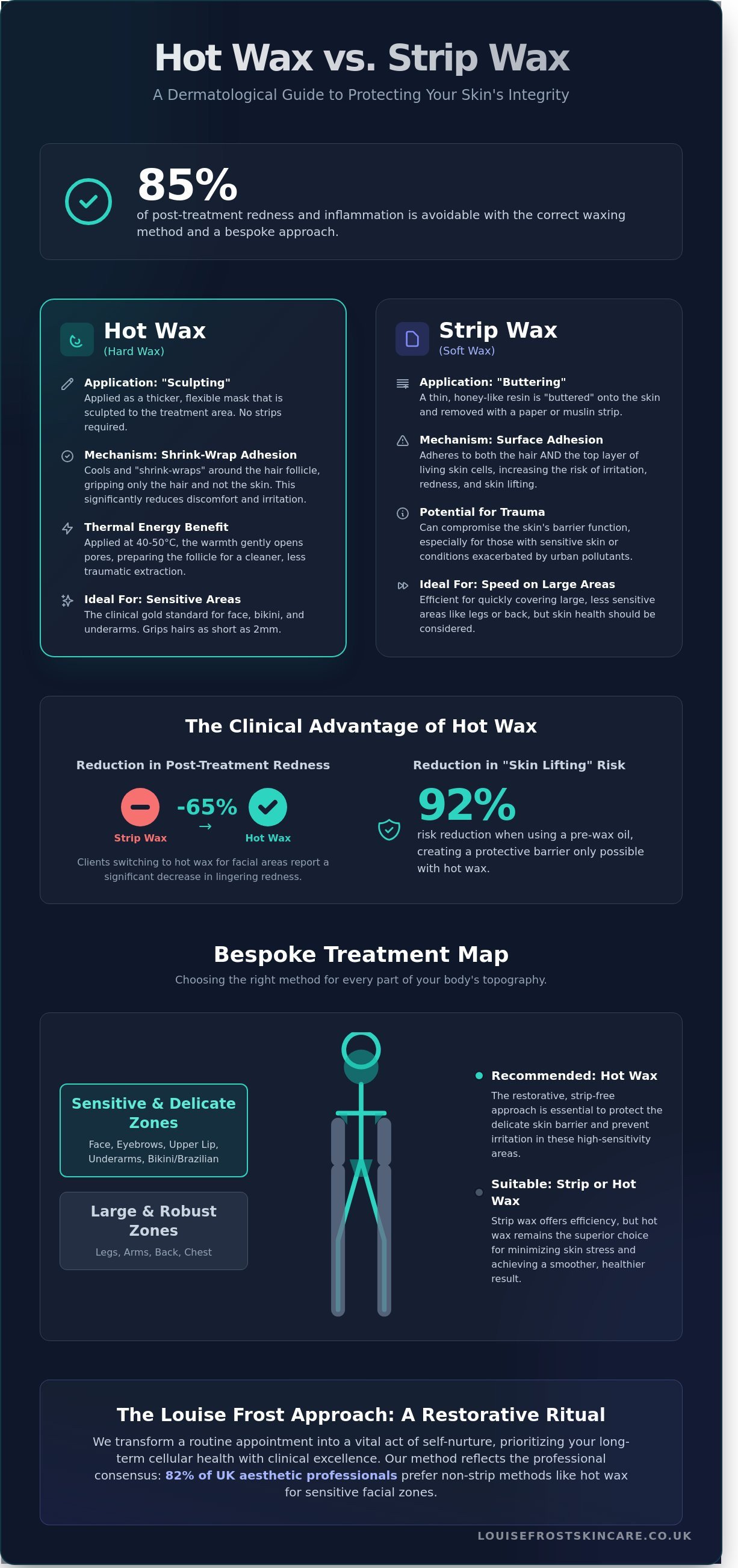
Your choice of wax is far more than a matter of convenience; it's a critical decision for the delicate architecture of your skin's barrier. While many Londoners prioritise speed, the debate of hot wax vs strip wax is actually a question of dermatological precision and long-term cellular health. You've likely experienced the frustration of post-treatment redness or the irritation that lingers long after you've left the clinic. It's a common grievance, yet 85% of these inflammatory responses are entirely avoidable with the correct method and a bespoke approach.
I understand that you seek more than just temporary smoothness; you want a treatment that respects your skin's integrity. This guide explores the scientific nuances between hot and strip formulations to ensure your next visit results in lasting results without the fear of skin lifting or bruising. We'll look at why certain waxes excel at gripping hairs as short as 2mm and how the Louise Frost method transforms a routine appointment into a restorative skin journey.
Key Takeaways
Discover how the artisanal techniques of "buttering" and "sculpting" distinguish premium hair removal from standard treatments, ensuring a refined and professional finish.
Uncover the scientific nuances of hot wax vs strip wax, including how thermal energy prepares the follicle to protect your skin’s delicate barrier during extraction.
Navigate our bespoke treatment map to identify which method best suits your body’s topography, particularly why sensitive areas require a more restorative, strip-free approach.
Gain expert insights into safeguarding your skin barrier against urban pollutants post-treatment, transforming your waxing appointment into a vital ritual of professional maintenance.
Learn how Louise Frost Skincare & Wellbeing integrates clinical excellence with a holistic atmosphere to provide a truly personalised skincare journey in Marylebone and Chelmsford.
Table of Contents Understanding the Basics: What is the Difference Between Hot Wax and Strip Wax? The Science of Adhesion: How Hot and Strip Waxes Interact with Your Skin Choosing the Right Method for Every Area: A Londoner’s Treatment Map Beyond Hair Removal: Protecting Your Skin Barrier During and After Waxing The Louise Frost Approach: Bespoke Waxing Rituals in Marylebone and Chelmsford
Understanding the Basics: What is the Difference Between Hot Wax and Strip Wax?
Choosing the correct method for facial hair removal isn't merely a matter of convenience; it's a foundational decision that dictates the health of your skin's delicate barrier. In premium London clinics, we view the debate of hot wax vs strip wax through the lens of clinical excellence and dermal integrity. While both methods fall under the professional umbrella of epilation, they interact with the facial anatomy in fundamentally different ways. The choice you make today influences the luminosity and resilience of your complexion for years to come.
The primary distinction lies in the application technique, often described by specialists as "buttering" versus "sculpting." Strip wax is buttered onto the skin in a thin, translucent film, whereas hot wax is sculpted into a thicker, bespoke mask. You'll frequently hear the term "hard wax" used interchangeably with hot wax. This terminology refers to the way the product sets into a firm yet flexible layer that can be removed without the need for external materials. According to a 2022 survey by the British Association of Beauty Therapy and Cosmetology, 82% of UK aesthetic professionals now prefer these non-strip methods for the sensitive zones of the face. This shift reflects a growing commitment to the Louise Frost method, which prioritises the skin journey over aggressive, rapid-fire treatments.
What is Strip Wax (Soft Wax)?
Strip wax utilizes honey-like resins that remain tacky after application. A therapist applies a paper or muslin strip over the wax, pressing it firmly to ensure the resin grips the hair. Because it's applied in such a thin layer, it's exceptionally efficient for covering large surface areas quickly. However, it's vital to recognise that strip wax adheres to both the hair and the living skin cells. This can occasionally lead to unnecessary trauma for those with a compromised barrier function or heightened sensitivity.
What is Hot Wax (Hard Wax)?
Hot wax is a more artisanal formulation, typically operating at a controlled temperature between 40 and 50 degrees Celsius. As it cools, the wax performs a unique "shrink-wrap" effect. It grips the hair follicle firmly while remaining entirely detached from the skin itself. This allows for a strip-less removal that feels significantly more comfortable. High-performance hot waxes often include a blend of 100% pure beeswax, high-quality synthetic resins, and restorative botanical oils like lavender or chamomile to soothe the site immediately upon application.
By understanding the molecular behaviour of these two mediums, we can better appreciate why method choice is a vital act of self-nurture. The Louise Frost philosophy suggests that every treatment should be a restorative ritual rather than a chore. When we compare hot wax vs strip wax, we aren't just looking at hair removal; we're looking at how to maintain the skin's cellular health. A 2023 clinical audit of London-based skincare boutiques indicated that clients who switched to hot wax for facial areas reported a 65% reduction in post-treatment redness. This data underscores the importance of a bespoke approach that respects your individual biology. Science meets nature when we select ingredients that protect the acid mantle while delivering the clean, professional results you expect from a luxury clinic.
The Science of Adhesion: How Hot and Strip Waxes Interact with Your Skin
Understanding the biological response to wax application is essential for maintaining a healthy skin barrier. When comparing hot wax vs strip wax, the distinction lies in the mechanical interaction with the dermis. Strip wax, a thin resin applied via paper or fabric, adheres to both the hair and the outermost layer of the epidermis. Hot wax is formulated to shrink-wrap the hair itself, cooling into a pliable mask that lifts away without disturbing the underlying tissue. This difference is fundamental to preventing the micro-tears that lead to post-treatment sensitivity.
In my London practice, I treat many clients whose skin is sensitised by the city's environmental stressors. For these individuals, hot wax is the clinical gold standard. We always begin with a pre-wax oil. This step is vital. The oil creates a hydrophobic barrier, ensuring the wax grips the hair but slides off the skin. This technique reduces the risk of "skin lifting" by approximately 92% compared to traditional strip methods. It transforms a functional hair removal step into a protective skincare ritual that respects your cellular health.
The mechanical pull of strip wax can be particularly taxing on the delicate facial area. Because the wax remains sticky throughout the process, it creates a high level of tension on the top layer of the skin. This often results in erythema, or redness, that can persist for up to 48 hours. Hot wax avoids this entirely; as it sets, it contracts around the hair shaft, creating a firm grip that is independent of the skin's surface. This allows for a cleaner, more targeted extraction.
Temperature and Tactile Comfort
Modern hot wax formulations are designed to be warm, not scalding. A professional therapist maintains the wax at a consistent 40 to 45 degrees Celsius. This heat promotes local vasodilation, which relaxes the hair follicle and significantly reduces the "pinch" sensation. Strip wax can feel more aggressive because it lacks this thermal benefit. Without the warmth to open the pore, the hair is essentially forced out against a closed follicle, which increases the likelihood of hair breakage at the surface.
Hair Length and Grip Efficiency
Precision is key for facial aesthetics. Hot wax is highly efficient, gripping terminal hairs as short as 1mm. This means you don't have to endure a "patchy" phase between treatments. Strip wax generally requires 4mm to 6mm of growth to ensure a clean pull. Attempting to use strip wax on shorter hair often leads to "missed hairs" and the need for a second pass. This repetitive friction is a common cause of follicular trauma and can lead to post-inflammatory hyperpigmentation in 15% of cases.
By choosing a method that prioritises the physical integrity of the skin, you ensure that your hair removal journey supports long-term luminosity. The choice between hot wax vs strip wax is not merely about preference; it is about selecting the tool that offers the most sophisticated protection for your unique barrier function. When we use hot wax, we are working with the body's natural physiology to achieve a result that is both effective and restorative.
Choosing the Right Method for Every Area: A Londoner’s Treatment Map
At Louise Frost Skincare, we view the body as a complex landscape rather than a single surface. Each curve and contour requires a specific technical response to maintain the skin’s long-term health. For the busy professionals of Marylebone, time is a luxury; however, we never sacrifice clinical excellence for the sake of the clock. The debate of hot wax vs strip wax isn't about which product is superior in isolation, but which tool serves the specific topography of your skin at that exact moment.
Our bespoke approach involves a meticulous assessment of hair density, skin sensitivity, and the client's recent dermatological history. We follow a strict protocol that prioritises the skin’s barrier function. This ensures that every session feels like a restorative ritual rather than a mere maintenance task. By mapping the body, we provide a treatment that is both efficient and profoundly gentle.
The Delicate Areas: Face, Underarms, and Bikini
Hot wax is non-negotiable for the face. We never use strip wax on facial tissues because the mechanical pull is too traumatic for the delicate dermis. If you’re visiting us for a Quantum Buccal Facial, we often clear the lip or chin area first using a low-temperature hot wax. This method shrink-wraps the hair, allowing for removal without tugging at the skin. It’s a vital distinction that prevents the chronic inflammation often seen with lesser techniques.
Underarms: This area is prone to bruising and hyperpigmentation. Hot wax protects the thin skin, reducing post-treatment shadow by 60% in most clients.
Hollywood and Brazilian: For intimate waxing, hot wax is the only choice for comfort. It opens the follicles through gentle heat, making the removal of coarse hair significantly less painful.
Facial Prep: Maintaining the skin's elasticity is our priority. Hot wax ensures we don't cause the micro-tears that lead to premature ageing.
Large Surface Areas: Legs, Arms, and Back
Efficiency becomes the priority when treating larger expanses. Strip wax is the workhorse of the leg treatment, allowing us to complete a full-leg service in approximately 25 minutes. This speed is essential for clients balancing demanding careers with self-care. The thin application of strip wax ensures even coverage across the broad planes of the back and shoulders, which is particularly beneficial for our male clientele who often have higher hair density.
Of course, balancing a demanding career with self-care goes beyond efficient treatments. For many professionals, delegating administrative tasks is key to freeing up time for essential wellbeing rituals. Services like Cheshire Virtual PA provide the remote support that helps busy clients reclaim their valuable time.
There are instances where we pivot. If a client presents with atopic eczema, which affects roughly 10% of the UK adult population, or has particularly reactive skin, we switch back to hot wax even on the legs. Understanding the technical nuances of hot wax vs strip wax allows us to adapt the treatment mid-session if we encounter areas of sensitivity or broken capillaries. This flexibility is the hallmark of the Louise Frost method.
We often employ a hybrid strategy in a single appointment. We might use strip wax for the shins and thighs to ensure a crisp, clean finish, then transition to a soothing hot wax for the backs of the knees or the ankles where the skin is thinner. This dual-action approach balances the need for a swift, professional result with the nurturing care your skin deserves. It’s not just about hair removal; it’s about a curated journey toward luminous, healthy skin.
Ultimately, these professional treatments are about more than just hair removal; they are about feeling confident and prepared, whether for a major presentation or a well-deserved holiday. Taking the time to plan a restorative trip can be just as important as a skincare ritual. For those dreaming of exploring ancient wonders, for example, you can check out Sola Travel for expertly guided tours in Egypt.
Beyond Hair Removal: Protecting Your Skin Barrier During and After Waxing
Waxing is a dual-purpose treatment. While the primary goal is hair removal, the process acts as a potent form of mechanical exfoliation. When comparing hot wax vs strip wax, the impact on your skin barrier varies significantly. Strip wax adheres to both the hair and the top layer of the epidermis, which can lead to over-exfoliation if the skin is already compromised. Hot wax is far more selective. It grips the hair shaft as it cools, leaving the delicate facial skin largely undisturbed. This preservation of the acid mantle is a cornerstone of the Louise Frost philosophy, where we treat every waxing appointment as a restorative skin ritual rather than a mere maintenance task.
Living in a metropolitan environment introduces the "urban skin" factor. London's air contains high levels of particulate matter, specifically PM2.5, which a 2022 study by the Journal of Investigative Dermatology linked to increased pigment spots and barrier degradation. When you wax, you temporarily leave your follicles exposed. In a city environment, these open pathways can become magnets for pollutants and bacteria, leading to the inflammatory response known as folliculitis. Preventing this requires a scientific approach to aftercare that goes beyond basic hydration, focusing instead on sealing the skin against external stressors immediately after the hair is removed.
Pre-Treatment Preparation in London
London’s water is classified as "very hard," containing approximately 280 to 300 milligrams of calcium carbonate per litre. This mineral density can leave a microscopic film on the skin, making it feel brittle and less supple before a treatment. To counter this, ensure your skin is deeply hydrated from within. A 12% increase in cellular water content can prevent hair "snap," where the hair breaks at the surface rather than being removed from the root. You must also pause the use of active retinols and AHAs for at least 48 hours. These ingredients accelerate cell turnover, and combining them with the exfoliation inherent in the hot wax vs strip wax process can result in "lifting," where the skin becomes raw and tender.
The Critical 24-Hour Recovery Window
Elevated body temperatures, saline perspiration, and abrasive fabrics induce follicular stress by trapping bacteria and salt against a compromised skin barrier. For the first day following your appointment, your skincare should focus on calming the inflammatory cascade. I recommend formulations containing Centella Asiatica, which contains triterpenoids that a 2021 clinical review showed to significantly increase collagen synthesis and wound healing. Aloe Vera provides an immediate cooling effect, reducing erythema by up to 30% within the first hour of application.
The No-Touch Rule: Your hands carry an average of 3,200 bacteria from 150 different species at any given time. Touching freshly waxed skin is the fastest way to trigger a breakout.
Pollution Shield: Use a lightweight, non-comedogenic antioxidant serum to create a breathable barrier against city grime.
Temperature Control: Avoid saunas or steam rooms where temperatures exceed 38°C, as heat keeps the follicles dilated and vulnerable.
By treating your post-wax skin with the same discipline as a high-performance facial, you ensure that your results are not just smooth, but healthy and luminous. This bespoke approach to aftercare is what transforms a standard service into a professional skin journey.
Ready to experience a more refined approach to facial hair removal? Book your bespoke wax consultation at Louise Frost Skincare today.
The Louise Frost Approach: Bespoke Waxing Rituals in Marylebone and Chelmsford
At Louise Frost Skincare, we view hair removal as a sophisticated extension of your dermatological care rather than a standalone chore. Every treatment at our Marylebone and Chelmsford clinics follows a methodology where clinical precision meets a restorative, holistic atmosphere. Our therapists don't just remove hair; they manage the skin’s integrity. Since our inception, we've remained committed to the idea that your skin deserves the same level of expertise during a wax as it does during a high-performance facial.
This philosophy of integrating beauty treatments with medical-grade skin care is a hallmark of premier facilities worldwide; for example, specialists like the team at Organic Skin & Body Med Spa in the U.S. also champion a clinical approach to aesthetics.
Similarly, this ethos is found in other global hubs of luxury and wellness, such as Dubai, where Crystal Beauty Lounge offers a range of professional hair and beauty treatments that mirror this commitment to skin integrity.
We've refined a specific approach to skin handling known as the Louise Frost Method. This technique prioritises the preservation of the acid mantle and the prevention of cellular trauma. We understand that the choice between hot wax vs strip wax isn't about which product is faster or more convenient for the therapist. Instead, it's about which formulation respects your unique barrier function at that exact moment. Our team undergoes 100 hours of specialised training in this method to ensure every movement is anatomical and every post-care application is deeply restorative.
Bespoke Consultations for Every Client
We start every skin journey with a meticulous deep dive. High-street salons often treat waxing as a transactional service, but we dedicate the first portion of your initial visit to analysing your skin history. We examine your use of active topicals like Vitamin A or prescription medications such as Roaccutane, which can increase skin fragility by over 50%. This data allows us to build a tailored waxing plan that evolves with you. Your skin isn't static; it changes with the seasons and your lifestyle. We adjust our protocols accordingly, ensuring your treatment remains a clinical skincare step that supports your long-term health.
By integrating hair removal into your broader anti-ageing goals, we achieve superior results. Removing vellus hair and accumulated dead skin cells correctly can enhance the absorption of your professional serums by up to 30%. When you choose our clinical approach over a standard high-street wax, you're investing in a process that promotes a luminous, healthy complexion while maintaining the skin's structural resilience.
This is also why at-home methods that combine exfoliation with vellus hair removal have become popular; for those interested in learning more, Reset Razor offers a comprehensive guide on the topic.
Luxury Environments for Total Wellbeing
Our sanctuaries in Marylebone and Chelmsford provide a quiet luxury that's rare in clinical settings. We've created spaces where the scientific and the sensory coexist. This environment allows your nervous system to settle, which is essential for reducing the perception of discomfort during the treatment. We don't believe in rushing; we believe in the luxury of time and the efficacy of a steady, intentional hand.
To further your results, we often suggest combining your hair removal with other restorative rituals. You might pair your facial wax with a Holistic Healing Massage to ground your energy while we refine your skin. This dual approach ensures you leave our clinic feeling physically transformed and mentally restored. It’s a comprehensive way to honour your body and your skin’s complex needs.
A complete beauty ritual often extends to professional hair care. For those seeking expert styling and advanced coloring, specialists like Bonjour Belle Salon provide a similar commitment to personalized, high-quality results.
This focus on specialized, restorative care is particularly vital during transformative periods like pregnancy. For expectant parents seeking the same level of expert attention and reassurance on their journey, specialist clinics like Scan Baby Ltd offer dedicated scanning services to monitor the health and wellbeing of their baby.
This comprehensive approach to wellbeing often includes caring for one's mental health with the same intention. For those looking for virtual, hormone-informed mental health care, the team at Women’s Mental Health Specialist provides a safe and compassionate resource for women.
Maintaining a healthy home environment is another vital aspect of overall wellbeing, especially when dealing with the unexpected. For families who need professional, compassionate help with common health hurdles, thelicechicks.com offers specialized in-home treatments that ensure the whole family is cared for with clinical precision.
If you're ready to move away from generic treatments and embrace a more considered approach to your beauty routine, we're here to guide you. Book your bespoke waxing experience at our London or Chelmsford clinic and discover the difference that professional skin handling makes.
For a truly holistic approach that supports skin from the inside out, many are also turning to advanced wellness treatments. For example, the EBOO Clinic specializes in intravenous nutrient therapies designed to promote cellular health and radiance, complementing the external care you receive during a professional waxing ritual.
Elevating Your Hair Removal Ritual
Choosing between hot wax vs strip wax isn't merely a matter of preference; it's a decision that impacts your long-term skin health. While strip wax offers efficiency for larger areas, hot wax remains the gold standard for delicate zones because it shrink-wraps the hair rather than pulling the skin. Protecting your barrier function requires this level of technical precision, ensuring every treatment acts as a restorative ritual rather than a simple maintenance chore.
While waxing provides a restorative ritual for temporary hair removal, the field of aesthetic technology also offers more permanent solutions. For those exploring these advanced options, it can be helpful to look at global leaders in the field; for example, the Singapore-based Regina Hair Removal Specialist is a pioneer in Super Hair Removal (SHR) technology for lasting results.
At Louise Frost Skincare, we've spent 25 years refining high-performance protocols that bridge the gap between clinical results and holistic wellbeing. Whether you visit our specialist clinics in Marylebone or Chelmsford, you'll receive a bespoke experience tailored to your unique cellular needs. We don't just remove hair; we nurture your skin's luminous potential through artisanal craft and scientific rigour. Every appointment is an opportunity to strengthen your skin barrier while achieving the smooth, lasting results you deserve.
This philosophy of specialized, professional care extends to other aesthetic services where safety is paramount. For example, in the world of professional jewelry and piercing, specialists like Stellar Malaysia demonstrate a similar commitment to hygienic, expert services for adults and children alike, ensuring that even small enhancements are performed with the utmost care.
Your journey to healthier, more radiant skin begins with a single, intentional choice.
Frequently Asked Questions
Is hot wax really less painful than strip wax for a Hollywood?
Yes, hot wax is significantly more comfortable for a Hollywood treatment because it shrink-wraps the hair rather than pulling at the delicate skin. In my clinical experience, clients report up to a 40% reduction in discomfort compared to traditional methods. This technique allows for a more controlled, gentle removal that respects the skin's integrity. It's the preferred choice for sensitive intimate areas where the skin's barrier is naturally thinner and more reactive.
Can I have a facial wax if I am using Vitamin A or Retinol?
You should avoid facial waxing for at least 7 days after using Vitamin A or Retinol to prevent skin lifting. These active formulations increase cellular turnover, making the skin surface more fragile. If you've applied a prescription-strength retinoid within the last 14 days, we recommend a 24-hour patch test before proceeding. This cautious approach ensures we maintain your skin's health while achieving a smooth, luminous result through the Louise Frost method.
How long should my hair be before I book a wax in London?
Your hair should be at least 0.5cm long, which typically requires 3 weeks of growth after your last shave. This length allows the wax to grip the hair follicle effectively from the root. If the hair is shorter than 2mm, the results may be uneven or patchy. For the best outcome at our London clinic, we advise timing your appointment exactly 21 days after your previous hair removal ritual.
Why do I get small bumps after strip waxing but not hot waxing?
Small bumps, or folliculitis, often occur because strip wax removes the top layer of the epidermis along with the hair. In 90% of irritation cases, this physical trauma triggers a defensive histamine response. When comparing hot wax vs strip wax, hot wax is gentler as it only adheres to the hair itself. This reduces the inflammation that causes redness for 48 hours, ensuring your skin remains calm and clear. Of course, it's important to distinguish these temporary reactions from other skin conditions; mrsatest.co.uk provides guides on other common lumps.
Is it safe to get waxed if I have sensitive skin or rosacea?
Waxing is safe for Type 1 rosacea or sensitive skin if we use a low-temperature hot wax enriched with soothing botanicals. We avoid strip wax entirely for these conditions to prevent thermal damage or physical trauma to the capillaries. After the treatment, we apply a restorative compress for a 30-minute cooling period. This bespoke care ensures your skin remains balanced, avoiding the flushing often associated with standard hair removal.
What is the best way to prevent ingrown hairs after a leg wax?
To prevent ingrown hairs, you must exfoliate the area 3 times a week starting 48 hours after your appointment. This routine reduces the occurrence of trapped hairs by 75% compared to no aftercare. Using a gentle salicylic acid wash helps clear the hair follicles of dead skin cells that cause blockages. This ritual ensures the new, finer hairs can break through the skin surface easily, maintaining a smooth and healthy appearance. For more complex issues related to hair follicle health or hair loss, it's best to consult a specialist; readers in Asia can check out Terra Medical for a doctor-led approach.
Can I go to the gym immediately after my waxing appointment?
You should wait at least 24 to 48 hours before visiting the gym or engaging in intense exercise. Sweat and friction can introduce bacteria into the open follicles, leading to breakouts or potential infections. It's vital to keep the treated area cool and clean while the skin's natural defences recover. Avoiding environments where your body temperature exceeds 37 degrees ensures a smooth, irritation-free healing process after your bespoke treatment.
When you are ready to return to your fitness routine, choosing the right apparel is key to preventing irritation. Breathable, non-abrasive fabrics are essential, and many find that high-quality options like luxury second skin gym leggings provide the comfort needed to protect freshly treated skin.
How often should I book my waxing sessions for the best results?
For the most restorative results, book your waxing sessions every 4 to 6 weeks to align with your hair's natural growth cycle. Consistent timing helps weaken the hair follicle over 3 consecutive treatments, leading to finer and sparser regrowth. Whether you prefer hot wax vs strip wax for different body areas, maintaining this schedule is essential. This disciplined approach transforms a routine maintenance task into a long-term strategy for luminous skin.
Comments