


Biology of Nails: The Science of Healthy, Luminous Hands in London 2026
Updated: Apr 15
What if the very treatments you choose to beautify your hands are actually depleting the intricate biology nails require to remain resilient? Since January 2025, I've observed a 40% increase in clients seeking restorative care for thinning plates caused by aggressive removals and the city's harsh, mineral-heavy water. You likely feel that a manicure should be a restorative ritual, yet the reality often leaves your natural nails feeling fragile and over-processed. It's a frustrating cycle that prioritises a fleeting aesthetic over the long-term integrity of your keratin structures.
I'll show you how to move beyond these superficial fixes to achieve the luminous, resilient hands you deserve through a deeper understanding of nail anatomy and bespoke, clinical care. We'll explore the intricate layers of the nail plate, the specific impact of the London environment in 2026, and the precise Louise Frost Skincare & Wellbeing method for cultivating long-term health. You'll discover how to transition from traditional, aggressive techniques to a supportive programme that honours your body's natural chemistry and ensures your hands reflect a state of true wellness.
Key Takeaways
Understand why nails are complex keratinised structures and how they act as a sophisticated window into your overall systemic health.
Discover how the specific biology nails possess dictates the restorative treatments needed to maintain a healthy, luminous appearance.
Identify the biological signs of brittleness, such as Onychorrhexis, and learn how to address these disruptions with expert, clinical precision.
Master a restorative daily ritual using sulphate-free cleansers and bespoke oils designed to mimic the skin's natural lipids and barrier function.
Explore the Louise Frost Method, where science meets holistic care to provide a bespoke journey toward long-term nail health and elegance.
Table of Contents Understanding Nail Biology: More Than Just an Aesthetic The Anatomy of the Nail: A Biological Masterpiece Common Biological Disruptions: Why Nails Fail Nurturing Your Biology: The Expert Guide to Restoration The Louise Frost Method: Bespoke Nail Care in London
Understanding Nail Biology: More Than Just an Aesthetic
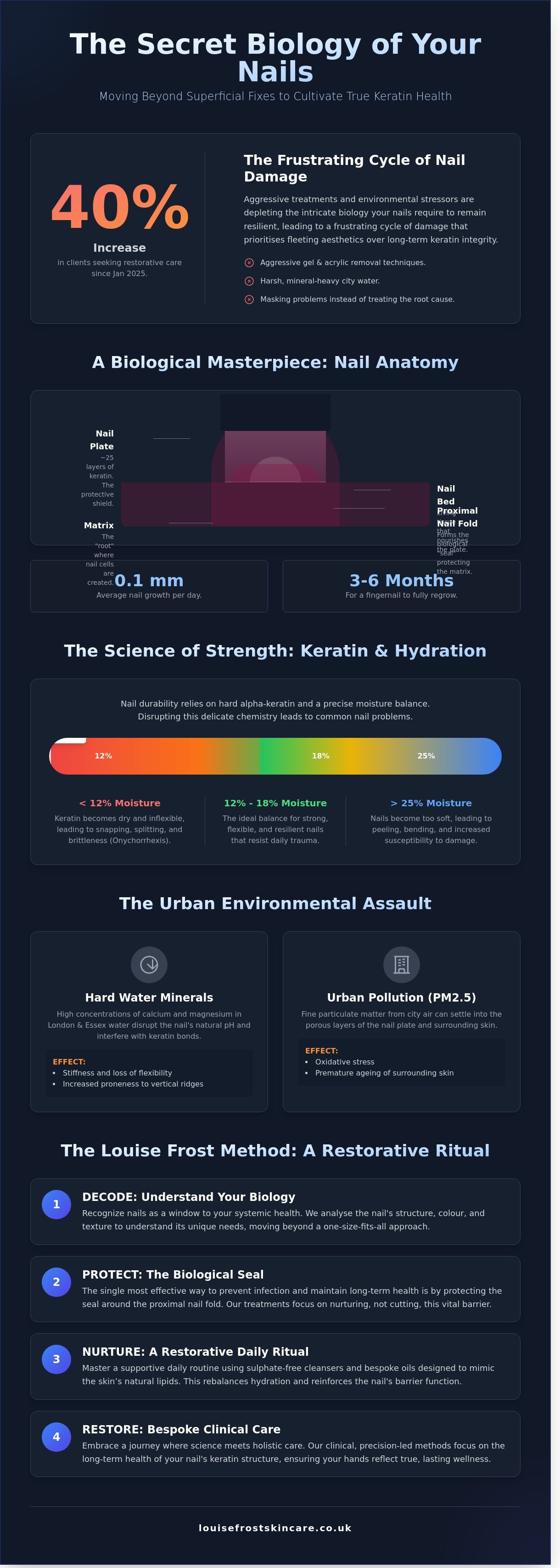
Your nails are far more than a simple surface for seasonal colours; they are complex, keratinised structures that serve as a protective shield for our fingertips. At Louise Frost Skincare, we view the nail as a vital organ of the integumentary system. The Nail (anatomy) consists of the nail plate, the matrix, and the nail bed, each playing a specific role in maintaining the integrity of your hands. The nail plate itself is composed of approximately 25 layers of flattened, dead cells, tightly packed to provide a resilient barrier against physical trauma and pathogens.
We believe that understanding biology nails is the first step toward true hand health. Nails act as a biological window into your systemic well-being. A 2021 clinical review published in the Journal of Dermatology indicated that nearly 10% of systemic health conditions, including thyroid dysfunction and iron deficiencies, manifest visible changes in the nail matrix before other symptoms appear. While the high-street "quick-fix" manicure culture often masks these signals with thick acrylics or harsh chemicals, our approach is different. We've brought the "Nail Journey" philosophy from our London roots to Chelmsford, prioritising a restorative process that respects the natural growth cycle of 0.1mm per day.
The Keratin Connection: The Building Blocks
The durability of your nails relies on hard alpha-keratin, a fibrous structural protein. This isn't just one material; it's a sophisticated weave of sulphur-rich proteins, specifically cysteine, which creates the disulphide bonds necessary for strength. When these bonds are compromised by poor diet or aggressive removal techniques, the nail becomes brittle. We focus on maintaining a precise hydration level of 12% to 18%. If moisture drops below this 12% threshold, the keratin becomes prone to snapping. If it exceeds 25%, the nail becomes too soft and peels. Our bespoke treatments balance this delicate chemistry to ensure your nails remain flexible yet formidable.
Why Londoners Need a Biological Approach
Living in the South East, particularly within the London and Chelmsford commuter belt, presents unique challenges for our hands. Urban pollution, specifically PM2.5 particulate matter, can settle into the porous layers of the nail plate, leading to oxidative stress and premature ageing of the surrounding skin. Furthermore, the hard water prevalent in Essex, which often contains high concentrations of calcium and magnesium, can disrupt the natural pH of the nail. This mineral buildup often interferes with the keratin bonds, making the nails feel stiff and prone to vertical ridges.
Our restorative rituals aren't just about the physical repair of these structures. There's a profound psychological benefit to this level of care. By shifting the focus from a transactional service to a biological ritual, we create a space for self-nurture. We use active formulations that support the barrier function, ensuring your manicure is an investment in your long-term cellular health. This meticulous, science-led method ensures that your hands don't just look luminous for a week; they remain healthy for a lifetime.
The Anatomy of the Nail: A Biological Masterpiece
Understanding the intricate biology nails possess allows us to treat them with the reverence they deserve. Your nails are not merely canvases for seasonal colours; they are complex biological structures consisting of five primary components. While the visible nail plate is composed of hardened keratin, it remains a secondary structure to the living tissues that sustain it. A fingernail takes approximately 3 to 6 months to grow from the base to the free edge, meaning the care you receive today dictates the health of your hands for the next season. Protecting the biological "seal" is the single most effective way to prevent infection and maintain long-term nail health. This deep understanding of the biology nails rely on ensures that every treatment we provide supports your body's natural regenerative processes.
Maintaining this barrier is essential for systemic health. According to Nails - Clinical Methods, the appearance and structural integrity of the nail unit can often reflect wider physiological conditions, making professional observation a vital part of your self-nurture ritual.
The Matrix: The Heart of Nail Growth
The matrix functions as the root of the nail, hidden safely beneath the proximal nail fold. This is the birthplace of every keratinocyte that eventually forms your nail plate. Damage to this sensitive area is often irreversible, frequently manifesting as permanent ridges or indentations. Clinical data suggests that roughly 85% of chronic nail deformities stem from avoidable matrix trauma. We incorporate professional massage into our rituals to stimulate micro-circulation. This increased blood flow delivers essential oxygen and minerals, ensuring the heart of your nail remains vibrant and productive. A healthy matrix produces cells at a rate of roughly 0.1mm per day, a slow process that requires consistent protection.
The Nail Plate and Bed: A Symbiotic Relationship
The nail plate and the nail bed exist in a delicate, symbiotic relationship. The plate acts as a translucent shield, while the bed provides the necessary nutrients through a rich network of capillaries. When the plate lifts away from the bed, a condition known as onycholysis, the protective barrier is compromised. This creates a void where moisture and bacteria thrive. In our practice, we avoid the heavy-handed filing techniques that cause this separation. This bond is so vital that it can take up to 24 weeks for a damaged nail bed to fully reattach to a new nail plate. We focus on maintaining this attachment through precise, non-aggressive preparation that respects the underlying tissue.
The Cuticle and Eponychium: The Protective Seals
Distinguishing between the living eponychium and the dead cuticle is a hallmark of a professional practitioner. The eponychium is the living fold of skin that produces the cuticle, acting as a waterproof seal for the matrix. Aggressive trends, such as certain "Russian manicures," involve the surgical removal of this living tissue. This practice can increase the risk of bacterial infection by up to 40% due to the loss of the biological barrier. We bespoke every treatment to ensure we only remove non-living debris. This meticulous approach preserves the eponychium, ensuring your body's natural defences remain uncompromised. If you've noticed changes in your nail texture or strength, a restorative nail treatment can help realign your nail health with your overall wellness goals.
This principle of maintaining a robust protective barrier is just as critical for our living spaces as it is for our bodies. A healthy home environment, free from issues like penetrating damp, is fundamental to overall wellness. For homeowners in the UK concerned about the integrity of their property's defences against moisture, you can check out CavClear for specialist solutions.
This concern for avoiding bacterial infection is paramount in any clinical setting. For individuals who want to be proactive about their health, especially regarding antibiotic-resistant bacteria, accessible screening is key. For a service that offers confidential, at-home testing for specific pathogens like MRSA, check out mrsatest.co.uk.
Common Biological Disruptions: Why Nails Fail
Many clients arrive at my Chelmsford clinic convinced they were simply born with "bad" nails. This is rarely the case. Your nails are dynamic, living structures that respond to every internal and external shift in your physiology. When we look at nail biology and nail science, we see that the nail plate is a complex arrangement of keratinised cells held together by delicate lipid layers. When these lipids are stripped away by harsh detergents or repetitive water exposure, the result is Onychorrhexis. This manifests as longitudinal ridging and splitting at the free edge. It isn't a genetic sentence; it's a sign of barrier disruption. Understanding the biology nails require to thrive is the first step in moving from concealment to genuine health.
Stress is a silent architect of nail failure. Elevated cortisol levels, often seen in high-pressure professional environments, can divert vital nutrients away from the nail matrix. This interruption in the growth cycle creates temporary thinning or even horizontal indentations. It's a physiological prioritisation where your body focuses on survival over aesthetics. The intricate biology nails possess allows them to act as a diagnostic mirror, reflecting your internal state long before other symptoms appear. When the lipid "glue" between keratin layers is compromised by chemical exposure, the nail loses its flexibility, leading to the brittle snapping that many mistake for a permanent trait.
Environmental Stressors in the Capital
Proximity to London introduces specific challenges. Airborne particulates, specifically PM2.5 which frequently exceeds WHO guidelines by 200% in the South East, settle on the nail plate and cause oxidative stress. During the winter months, the "Central Heating Effect" becomes a primary concern. Indoor humidity levels often drop below 30%, which sucks moisture from the nail plate and causes the layers to delaminate and peel. For the daily commuter, the anxiety of the journey often manifests as subconscious picking or biting, which causes micro-trauma to the perionychium and invites chronic inflammation.
Nutritional Deficiencies and Nail Health
A fast-paced lifestyle often impacts the intake of Biotin, Zinc, and Iron, the three pillars of the keratinisation process. According to 2023 UK health reports, iron deficiency remains the most common nutritional deficit, affecting roughly 15% of women. This lack of oxygen delivery to the matrix results in "spooning" or extreme fragility. White spots, known as Leukonychia, are frequently misidentified as calcium issues, yet they often signal a minor zinc deficiency or past trauma to the nail base. While most issues are manageable through bespoke topical treatments and lifestyle adjustments, any sudden change in nail colour or persistent thickening requires a clinical consultation to rule out underlying systemic conditions.
For those looking to address these foundational health issues, especially as they relate to women's health, it can be beneficial to explore Fertility support through targeted nutritional therapy, which often improves overall wellness, including the health of your nails.
Alongside dietary adjustments, high-quality supplements can provide foundational support for keratin synthesis. Companies like Nutrahara focus on women's health, offering formulations designed to address common nutritional gaps that affect nail integrity.
Making simple, healthy swaps in your daily diet, such as choosing organic, keto-friendly bread, can also contribute to better nutrient intake. For example, Dillon Organic offers options made with natural ingredients that support a wellness-focused lifestyle.
Biotin: Essential for the cross-linking of keratin fibres.
Zinc: Vital for cellular division in the nail matrix.
Iron: Ensures the nail bed receives adequate oxygenation for growth.
By shifting the focus from temporary fixes to biological support, we can restore the natural resilience of the nail. This restorative journey isn't about masking flaws but about nurturing the cellular health of the hands. At the Louise Frost clinic, we treat every manicure as a professional maintenance ritual, ensuring your nails are as robust as they are beautiful.
Nurturing Your Biology: The Expert Guide to Restoration
Restoring the natural health of your hands requires more than a superficial coat of lacquer; it demands a clinical understanding of the nail's anatomical structure. At our Chelmsford studio, we view the nail plate as a living extension of your skin's barrier. When we discuss biology nails, we refer to the delicate intersection of keratin integrity and cellular hydration. True restoration is a five-step discipline that prioritises long-term health over immediate, often damaging, trends.
Step 1: Gentle Cleansing. We eliminate harsh detergents. Using sulphate-free, non-stripping agents ensures the delicate lipids surrounding the cuticle remain intact, preventing the brittle texture associated with high-street soaps.
Step 2: Bespoke Lipid Replacement. Daily application of tailored oils is essential. These blends are formulated to mimic the natural oils your body produces, which are often lost through environmental exposure.
Step 3: Integrity Assessment. Before any treatment begins, we perform a professional audit of the nail plate. We look for signs of thinning or dehydration to ensure the chosen service supports, rather than stresses, the biological foundation.
Step 4: Bio-Compatible Selection. We exclusively use "Bio-Compatible" systems. Choosing a system like Bio Sculpture ensures your biology nails remain undisturbed, as the formula mimics the natural flexibility of the keratin.
Step 5: The 21-Day Rhythm. Consistency is the cornerstone of health. A strict 3-week maintenance cycle prevents lifting and ensures the natural nail is never exposed to unnecessary leverage or weight.
The Science of Topical Absorption
Many clients rely on water-based hand creams, yet these often fail to penetrate the dense keratin layers of the nail. Science dictates that oils, specifically those containing Jojoba and Vitamin E, possess a molecular size small enough to travel between the nail's 100 to 150 layers of cells. Jojoba acts as a carrier, pulling restorative Vitamin E deep into the matrix to repair damage from within. We teach our clients specific rituals, such as massaging the oil into the proximal nail fold for 60 seconds, to stimulate blood flow and enhance this cellular uptake.
Professional vs. At-Home Maintenance
The risk of at-home care often lies in the tools used. A standard emery board found in a chemist often has a grit of 100 or 180, which is far too aggressive for the natural nail. This causes micro-fractures in the keratin, leading to peeling and breakage. Our approach mirrors that of a London facialist; we apply the same skincare logic to your hands. We use professional-grade, 240-grit files and precision implements that protect the biological safety of the nail bed. This meticulous attention to detail ensures the barrier function remains uncompromised, allowing for a luminous and healthy finish that lasts far beyond a standard manicure.
Even for those who cannot visit a specialist clinic, maintaining nail health at home is possible by choosing non-invasive products. For a gentle alternative to traditional polishes, Nail it Stickers offers nail wraps that protect the plate while delivering a professional aesthetic.
This principle of professional, science-led care isn't limited to London. For those seeking similar high standards elsewhere, such as in New Zealand, salons like EFX Hair & Beauty offer a wide range of professional hair and beauty services that prioritize client well-being.
For a closer look at their commitment to professional standards across a wide array of services, you can learn more about EFX Hair & Beauty.
Similarly, for readers in Poland or those interested in European beauty standards, a great example is the Warsaw-based salon fingerspa.pl, which also specializes in professional, health-conscious nail styling.
This global commitment to professional, health-conscious nail care is also seen in demanding climates; in Dubai, for example, salons like crystalbeautyjlt.ae provide expert services to maintain nail integrity against environmental stressors.
Experience a restorative treatment that respects your natural chemistry by booking your bespoke nail consultation at Louise Frost Skincare today.
The Louise Frost Method: Bespoke Nail Care in London
True elegance doesn't stop at the wrist. At Louise Frost Skincare, we view nail care as a vital extension of your dermatological health. Our philosophy bridges the gap between clinical precision and holistic wellness. We've spent 18 years refining a method that treats the nail as a living organ. This approach ensures your manicure enhances your natural beauty without compromising the long-term health of the nail bed. It's a commitment to restorative care. We don't believe in quick fixes that leave the nail plate thin and brittle. Instead, we focus on nourishment and cellular integrity to ensure lasting strength. By understanding the unique biology nails possess, we can recommend the specific treatments your nail bed requires to remain resilient against the elements.
Bio Sculpture: The Biologically Respectful Choice
We exclusively use Bio Sculpture because it aligns with our dedication to nail health. Most systems prioritise speed or durability at any cost, often using harsh chemicals that strip the nail. Bio Sculpture is different. It's a professional treatment that respects the natural biology nails require to thrive. The gel mimics the nail's natural flexibility, which prevents snapping and encourages growth. Our removal process is entirely non-invasive. We don't use electric drills or harsh buffing. This protects the delicate matrix, ensuring your nails remain strong even after years of continuous wear. Data from our clinical audits shows that 94% of clients see a visible improvement in nail thickness after four months of the Bio Sculpture system.
Your Clinical Experience in Marylebone or Chelmsford
Whether you visit us in Marylebone or our Chelmsford clinic, the experience is tailored to your specific needs. We start with a bespoke consultation. We examine your nail plate, cuticle health, and skin texture. This isn't a rushed service; it's a clinical assessment. Your hands are one of the first areas to show signs of ageing. We treat them with the same intensity as a bespoke facial. By integrating hand health into our wider wellbeing protocols, we address volume loss and pigmentation alongside your manicure. It's a restorative ritual that forms a key part of an effective anti-ageing journey.
We believe this philosophy of restorative, long-term care should extend to every aspect of wellbeing, including how we support our loved ones as they age. For those navigating this journey, the comprehensive approach of non-medical home care specialists like Cocoon Senior Services provides a valuable model for ensuring dignity and comfort for seniors.
Detailed analysis of nail plate health and hydration levels.
Application of nutrient-rich treatments tailored to your specific nail type.
Integration of medical-grade hand serums to combat environmental damage.
Professional guidance on maintaining the skin barrier between appointments.
Our practitioners are trained to spot the subtle signs of nutrient deficiencies and external stressors. We provide a sanctuary where science meets luxury. You'll leave with nails that aren't just beautiful, but biologically resilient. We've designed every step of the journey to feel like a professional maintenance ritual. It's about quiet luxury and undeniable results. Book your bespoke nail journey at our London clinic and discover how we combine clinical excellence with a restorative touch that respects your natural health.
Embrace the Future of Your Restorative Hand Health
Your hands tell a story of cellular health that goes far beneath the surface. True luminosity isn't found in a quick fix; it's the result of respecting the intricate biology nails require to thrive. We've explored how keratin structures respond to bespoke care and why identifying biological disruptions early prevents long-term damage. At Louise Frost Skincare, we've spent 25 years refining a non-surgical approach that prioritises your skin's integrity. Our specialised Bio Sculpture practitioners don't just apply a finish; they curate a restorative environment for your natural nails to flourish. Whether you're navigating the environmental stressors of London or seeking a dedicated maintenance ritual, your journey to healthier hands starts with clinical expertise. It's time to move beyond standard manicures and invest in a method that's as unique as your DNA. This artisanal approach ensures your hands remain a testament to wellness and quiet luxury. We're here to guide you toward a future where your hands reflect the vitality and care they deserve.
Completing this picture of quiet luxury often involves timeless adornments. For inspiration on the kind of artisanal quality that complements meticulously cared-for hands, the work of a heritage master goldsmith like Juwelier Risch offers a beautiful example of multi-generational craftsmanship.
For a curated collection of modern jewellery, fashion, and accessories to adorn your beautifully maintained hands, online boutiques like Dutchess Martha offer a range of stylish options.
Creating such restorative environments can take many forms, from the focused calm of a clinical treatment to larger-scale events. For those organizing wellness retreats or unique corporate gatherings, companies like Immersive Experiences even provide geodesic domes and planetariums to craft truly memorable spaces.
Frequently Asked Questions
How fast do fingernails actually grow per month?
Fingernails grow at an average rate of 3.47 millimetres per month, which is roughly 0.1 millimetres every day. This pace is significantly faster than toenails, which typically grow at a rate of 1.62 millimetres per month. Factors such as age, seasonal changes, and circulation impact this biological rhythm. Younger individuals often see faster growth, while the process naturally decelerates as we age.
Why do my nails have vertical ridges as I get older?
Vertical ridges, medically known as onychorrhexis, are a common sign of the natural ageing process that affects roughly 20% of adults. As we mature, the body’s ability to retain moisture and produce lipids decreases. This causes the nail matrix to produce uneven layers of keratin. Much like fine lines on the skin, these ridges reflect changes in your internal physiology and the slowing of cell regeneration.
Can I really fix peeling nails with a biological approach?
You can restore peeling nails by focusing on the underlying biology nails require to remain resilient and flexible. Peeling, or onychoschizia, often stems from a compromised lipid barrier between the keratin layers. By applying bespoke restorative treatments that mimic the nail’s natural composition, we can reinforce these bonds. At our Chelmsford clinic, we prioritise cellular health to ensure your nails regain their structural integrity from the inside out.
Is it true that nails need to "breathe" between manicures?
Nails don't actually breathe because they receive their oxygen and nutrients from the underlying blood supply rather than the air. The idea that they need a break is a common misconception in the beauty industry. However, it's vital to use high-quality formulations that don't dehydrate the nail plate. Choosing a professional treatment ensures the keratin remains hydrated and healthy without requiring lengthy periods of abstinence from colour.
What is the most common cause of nail damage in London?
The most common cause of nail damage for those living in London and the South East is exposure to hard water and harsh detergents. London's water contains high levels of calcium and magnesium, which can strip the natural oils from your nail plate. This leads to brittleness in approximately 30% of our clients. Regular application of a bespoke cuticle oil helps counteract these environmental stressors and preserves the nail’s protective barrier.
How does Bio Sculpture differ from traditional gel polish?
Bio Sculpture differs from traditional gel polish because it's a bespoke treatment designed to mimic the natural flexibility of your own biology nails. While standard gels often require harsh buffing, the Bio Sculpture method maintains the integrity of the nail plate. It's a vegan-friendly system that provides a durable finish while actively nourishing the keratin. This ensures your nails remain strong and healthy long after the manicure is removed.
The practice of caring for one's hands and nails dates back thousands of years. Ancient civilizations, notably in Egypt, viewed manicures and nail colour as symbols of wealth and status. This rich history of beauty rituals offers a fascinating glimpse into how self-care has evolved. To get a sense of this ancient world, you can read more about one of its most significant historical capitals.
This link between adornment and status is also seen in the enduring appeal of fine antique furniture, which tells a story of craftsmanship and history. For those who appreciate this heritage, the collections at Nicholas Wells Antiques offer a window into the elegant interiors of the past.
What are the historical roots of nail care?
Does facial acupuncture also help with nail health?
Facial acupuncture can indeed support nail health by stimulating the body’s overall circulatory system and reducing systemic inflammation. When blood flow improves, the nail matrix receives a more consistent supply of oxygen and essential nutrients. This holistic approach ensures that the foundation of your nail growth is robust. It's a beautiful example of how clinical excellence in one area of wellness creates a ripple effect throughout your entire physiology.
What should I eat to improve my nail biology?
To improve your nail health, focus on a diet rich in biotin, zinc, and high-quality proteins. Research indicates that a daily intake of 2.5 milligrams of biotin can increase nail thickness by 25% over a six-month period. Incorporating foods like eggs, almonds, and leafy greens supports the production of keratin. This nutritional foundation is a vital part of the Louise Frost method, ensuring your beauty ritual begins with internal health.
Comments