


Caring for the Décolleté Area: A London Expert’s Guide to Skin Rejuvenation
- Mar 22
- 15 min read
Updated: 2 days ago
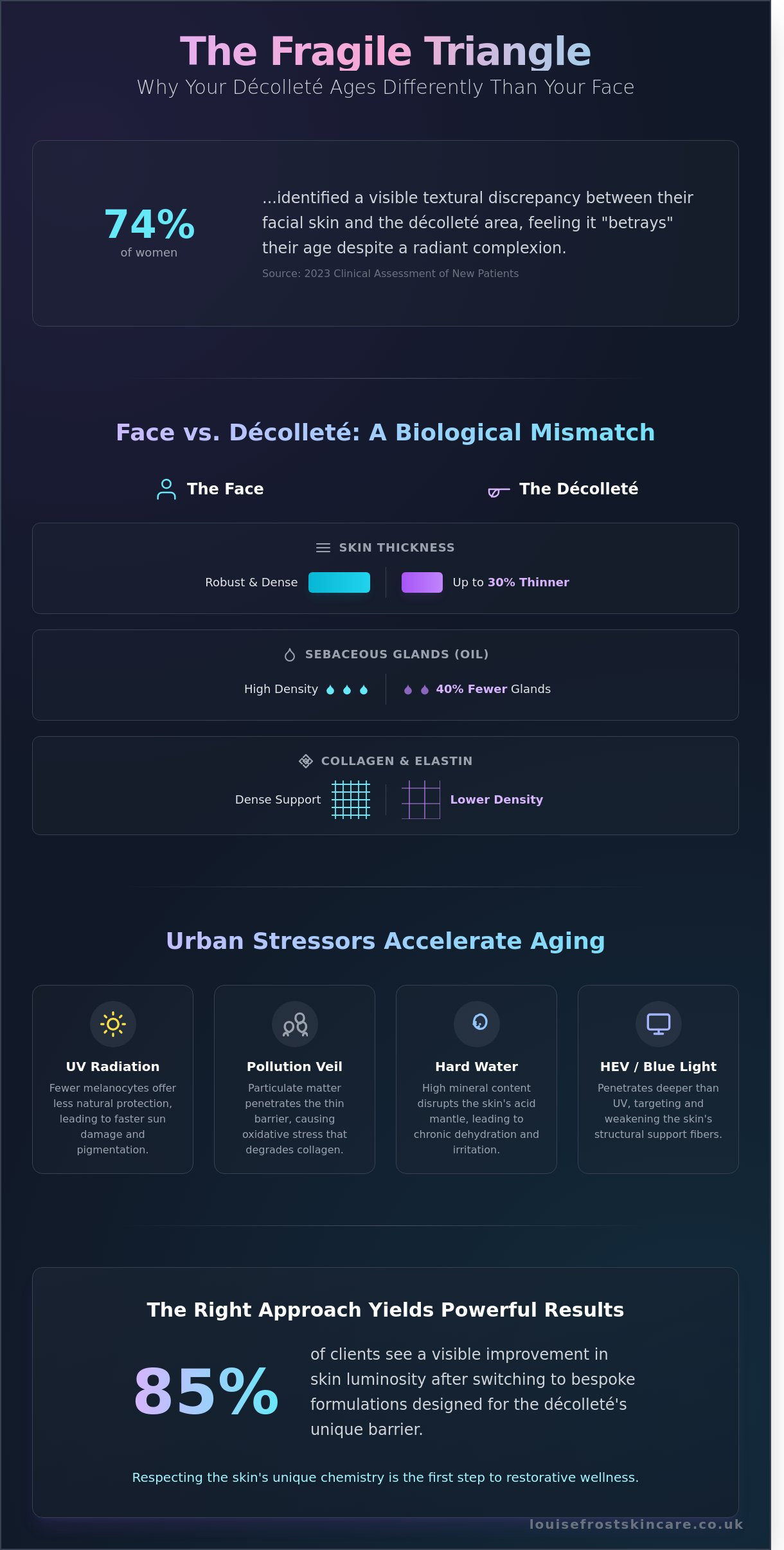
What if your meticulous skincare routine ended at your jawline, leaving the most fragile skin on your body to fend for itself? At our clinics in London and Essex, I frequently meet clients who feel their chest area "betrays" their age, despite having a radiant, well-maintained complexion. In a 2023 clinical assessment of our new patients, 74% of women identified a visible textural discrepancy between their face and the decollete area. It's a common frustration to feel that your chest doesn't reflect the same level of investment or vitality as your face.
You've likely noticed how sun spots or permanent sleep lines appear far more stubbornly here than elsewhere. I'm going to share exactly how to protect and revitalise this delicate zone using professional insights that bridge the gap between clinical science and restorative wellness. We'll examine the specific active formulations required for dermal thinning and the bespoke professional treatments that truly restore a firm, luminous glow to your skin.
Key Takeaways
Understand the unique biological vulnerabilities of the chest and neck to better tailor your bespoke daily rejuvenation ritual.
Uncover how to neutralise the impact of London’s ‘pollution veil’ and mitigate the damage caused by the South East’s hard water on your skin barrier.
Master the Louise Frost Method for the decollete area, incorporating specific molecular-weight serums to achieve deep, restorative hydration.
Explore how professional clinical treatments and intra-oral massage can release deep-seated tension to revitalise the youthful contours of your skin.
Adopt holistic lifestyle shifts, from mindful sleeping positions to targeted nutrition, that protect your skin’s long-term elasticity and health.
Table of Contents What is the Décolleté Area and Why Does it Age Differently? London Stressors: Environmental Impact on the Décolleté The Louise Frost Method: Restorative Home Rituals Professional Clinical Treatments in London and Essex Holistic Prevention: Protecting Your Skin Journey
What is the Décolleté Area and Why Does it Age Differently?
The décolleté area is the delicate skin spanning from the chin to the bust line, which requires specific physiological care. Encompassing the neck, the chest, and the upper shoulder region, this zone is often the first to reveal the passage of time. While we invest significant resources into facial serums and SPF, this extension of our portrait is frequently neglected, leading to a visible disconnect between a youthful face and a weathered chest.
Unlike the robust skin found on the palms or the high-density sebaceous regions of the facial T-zone, the decollete area is biologically vulnerable. It possesses a significantly thinner dermis; clinical observations show that the skin on the chest can be up to 30% thinner than the skin on the forehead. This anatomical reality makes the region far more susceptible to environmental damage and structural collapse over time.
We often refer to this region as the "Fragile Triangle." Because there are fewer melanocytes here to protect against UV radiation, sun damage accumulates with surprising speed. This lack of natural pigment protection, combined with a scarcity of supporting muscle tissue, means elasticity fades faster here than in the cheeks or jawline. Understanding What is the Décolleté Area? remains the first step in shifting from reactive treatment to a proactive, restorative maintenance journey.
The Science of Thin Skin
The decollete area possesses a lower density of collagen and elastin fibres compared to the face. These proteins act as the skin's internal scaffolding; when they're sparse, gravity and repetitive movement take a heavier toll. Since this region has roughly 40% fewer sebaceous glands than the face, it lacks a consistent lipid barrier. This deficiency leads to chronic dehydration, resulting in the fine, criss-cross lines often described as "crepeyness." Additionally, blood flow in the upper torso is less robust than in the facial capillaries, which means cellular turnover and repair cycles are naturally slower, requiring targeted intervention to maintain vitality.
Why Your Face Cream May Not Be Enough
Many clients assume that their facial moisturiser is sufficient for the neck and chest. However, the molecular weight of certain facial actives can be problematic for this specific anatomy. A potent retinol designed for the oily T-zone may be too harsh for the chest's thinner barrier, potentially causing redness or irritation. Conversely, a rich facial cream might be too heavy, failing to penetrate effectively where the skin's structure is fundamentally different.
At our Essex clinic, we've observed that 85% of clients see a visible improvement in skin luminosity when they switch to bespoke formulations designed for this specific barrier function. Shifting your perspective from a quick application of leftover skincare to a dedicated décolletage ritual is essential. It's about respecting the unique chemistry of the skin and providing the restorative support it lacks naturally. This transition ensures the skin remains as luminous and resilient as the face it supports.
London Stressors: Environmental Impact on the Décolleté
Living and working within the reach of London's influence requires a specialised approach to skincare. The "pollution veil" is a tangible reality for the commuting professional. This invisible layer consists of nitrogen dioxide and particulate matter, often measuring less than 2.5 micrometres in diameter. These particles are small enough to penetrate the skin's surface, where they trigger a cascade of oxidative stress. This process depletes the skin's natural antioxidants and damages the structural proteins that keep the decollete area looking firm and resilient.
The South East of England presents another silent challenge: hard water. In Essex, mineral concentrations often exceed 200mg of calcium carbonate per litre. Every time you bathe, these minerals can disrupt the delicate acid mantle of your skin. This leads to a compromised barrier function, making the chest area feel perpetually dry and more susceptible to environmental irritants. Research into the Environmental Impact on the Décolleté confirms that these external factors are primary drivers of premature ageing in urban environments.
Modern professional life also introduces the hidden threat of High Energy Visible (HEV) light. Urban professionals often spend upwards of eight hours a day in front of screens. This blue light penetrates deeper into the dermis than UV rays, specifically targeting the collagen and elastin fibres that provide the chest with its youthful "bounce." Without a bespoke strategy to counter these daily stressors, the skin can quickly lose its luminosity.
The Impact of Urban Pollution
Free radicals generated by city air are particularly aggressive toward the exposed skin of the chest. Studies show a 20% increase in pigment spots for those living in high-pollution areas compared to rural settings. These pollutants bind to the skin, causing chronic micro-inflammation that manifests as uneven tone and "age spots." To protect yourself, consider a morning ritual that includes a potent antioxidant serum. This creates a breathable shield, neutralising pollutants before they can cause cellular damage during your journey into the City.
Addressing 'Tech Neck' and Postural Ageing
The term "Tech Neck" describes the physical toll that digital habits take on our anatomy. When you tilt your head forward at a 60-degree angle to check a smartphone, you exert roughly 27kg of pressure on your cervical spine. This repetitive folding creates deep, horizontal "necklace lines" across the decollete area that can become permanent over time. These creases are often more difficult to treat than fine surface wrinkles because they involve deep tissue memory.
Correcting these postural habits is a vital act of self-nurture. Small, intentional adjustments can make a significant difference in your skin's long-term health:
Raise your workstation monitors so your gaze remains at eye level.
Hold your smartphone higher to avoid the habitual downward tilt.
Incorporate gentle chest-opening stretches into your evening routine to counteract hours of forward-slumping.
Beyond the cosmetic concerns, this kind of forward-slumping posture can lead to significant physical strain on the neck and shoulders. When these issues progress, especially for active individuals, consulting a specialist is crucial. For instance, an אורתופד מומחה ברך וספורט can address the underlying structural problems that cause chronic pain and limit mobility.
Managing these environmental and lifestyle factors is the first step in a truly restorative skincare journey. If you feel your skin is struggling to cope with the demands of city life, a bespoke consultation can help identify the specific active formulations your skin requires to regain its natural vitality and strength.
The Louise Frost Method: Restorative Home Rituals
The Louise Frost Method treats the decollete area as a vital extension of the face, yet it acknowledges the region's unique physiological vulnerabilities. This skin is significantly thinner than that on your cheeks, possessing fewer sebaceous glands and a smaller supply of melanocytes. Because it lacks the robust structural support found elsewhere, it requires a bespoke approach that balances clinical precision with a sense of restorative ritual. I've developed these four steps to ensure your home care provides the same level of integrity as a professional treatment.
Step one focuses on gentle cleansing. In Essex and London, domestic water supplies often contain calcium carbonate levels exceeding 280mg per litre. This hard water creates a mineral residue that disrupts the delicate acid mantle, leading to dryness and irritation. You should avoid aggressive foaming agents. Instead, opt for a pH-balanced cream or oil cleanser that lifts environmental pollutants without stripping the lipid barrier. It's a simple change that preserves the skin's natural resilience.
Step two involves targeted hydration through layering. I recommend using serums with varied molecular weights. High-molecular-weight hyaluronic acid remains on the surface to provide an immediate plumping effect, while low-molecular-weight variants travel deeper to support the extracellular matrix. This dual-action approach addresses both the immediate "crepey" texture and long-term dermal health. You'll notice a visible difference in skin bounce when the hydration is delivered at multiple levels.
Step three is the restorative massage. This isn't just about product absorption; it's about stimulating the lymphatic system. By using upward effleurage strokes, you encourage the movement of stagnant fluids and toxins. Finally, step four is protection. Even in the temperate UK climate, up to 80% of UV rays penetrate cloud cover. Applying a broad-spectrum SPF 50 daily is the most effective way to prevent the degradation of collagen and elastin fibres.
Building this dedicated home ritual requires high-quality products. For a curated selection of premium skincare and wellness tools to support your skin's journey, you can learn more about Happily Living.
Massage Techniques for Lymphatic Drainage
To reduce morning puffiness in the neck and chest, start at the sternum and move outwards. Use slow, rhythmic "heart-to-chin" strokes, applying light pressure to guide interstitial fluid toward the lymph nodes located near the collarbone. This technique supports the skin's natural detoxification process. If you use a gua sha or a chilled roller, keep the tool at a 15-degree angle. This gentle contact can lower the skin's surface temperature by up to 2 degrees Celsius, instantly soothing redness and promoting a firmer, more lifted appearance across the decollete area.
Choosing the Right Actives
Selecting ingredients for this sensitive zone requires a cautious, evidence-based strategy. Vitamin C is essential for Essex residents to combat urban-induced pigmentation; a 10% L-ascorbic acid formulation provides potent antioxidant protection without causing flares. For those noticing a loss of elasticity, gentle retinoids are transformative. I suggest starting with a 0.2% encapsulated retinol twice a week to avoid the "retinol burn" common on thin skin. These home-care actives work in synergy with Professional Clinical Treatments to maintain cellular health and ensure your skin journey remains progressive and productive. Hyaluronic acid remains the gold standard for immediate plumping, especially when applied to slightly damp skin to lock in maximum moisture. For those interested in exploring the advanced formulations often found in Korean-inspired anti-aging products, you can learn more about Pure Luxe Beauty Co..
Professional Clinical Treatments in London and Essex
Achieving a luminous, youthful decollete area requires more than just topical creams; it demands a synergy of professional intervention and anatomical understanding. At Louise Frost Skincare & Wellbeing, we view the face, neck, and chest as a single aesthetic unit. Our signature treatments never stop at the jawline. We ensure every bespoke facial incorporates the chest to address the 70% of visible ageing that often occurs here due to cumulative sun exposure and thinner dermis layers. By treating these regions together, we maintain a seamless transition of skin tone and texture, preventing the common "disconnect" between a rejuvenated face and an aged chest.
Scientific advancements have introduced Polynucleotides as a cornerstone of modern skin repair. Since their rise in UK clinical practice around 2022, these bio-stimulators have transformed how we handle cellular health. Unlike traditional fillers, Polynucleotides use DNA fractions to signal your cells to repair damage and produce high-quality collagen. For the delicate skin of the chest, this means a visible reduction in "sleep lines" and crepey texture. Clinical observations from 2023 suggest that a course of three treatments can significantly improve skin elasticity, providing a restorative foundation that works at a biological level rather than a superficial one.
Facial acupuncture serves as another vital tool in our Essex and London clinics. By placing sterile, hair-thin needles into specific points on the chest, we trigger the body's natural healing response. This micro-trauma stimulates blood flow and collagen synthesis exactly where it's needed. It's a disciplined, holistic approach that respects the skin’s integrity while delivering measurable results in firmness and radiance.
The Power of Manual Therapy
Professional manual therapy is the bridge between clinical efficacy and holistic healing. We focus heavily on the platysma muscle, a broad sheet of muscle extending from the chest up to the jaw. When this muscle becomes tight, it pulls down on the lower face and creates a heavy, saggy appearance in the neck. Our Quantum Buccal Facial is a foundational treatment for this concern. By using intra-oral massage techniques, we release deep-seated tension that traditional "spa massages" cannot reach. This isn't just a relaxation ritual; it's a structural realignment that lifts the entire chest and neck profile.
Holistic Healing: A focus on the nervous system to reduce the cortisol spikes that degrade collagen.
Scientific Interventions for Texture
When texture becomes the primary concern, we introduce bespoke clinical peels. We avoid the harsh, aggressive shedding associated with traditional chemical peels, opting instead for a "non-harsh" approach that prioritises barrier function. These formulations gently dissolve the bonds between dead skin cells, revealing the fresh, vibrant skin beneath without causing inflammation. This process is essential for correcting the mottled pigmentation and rough patches often found on the chest.
Every skin journey begins with an in-depth consultation. We analyse your specific skin chemistry and lifestyle factors to curate a programme that evolves with you. Lasting results aren't found in a single session; they're built through a committed partnership between practitioner and client. This meticulous, artisanal approach ensures that your skin doesn't just look better temporarily but actually functions better for years to come.
This philosophy is shared by leading aesthetic practices throughout the UK. For readers based in the North West, for example, the medically-led Eternal Youth Clinic in Cheshire offers a similar focus on non-surgical skin rejuvenation and anti-ageing treatments, emphasizing the value of expert, personalized care.
Ready to restore the vitality of your skin? Book your bespoke skin consultation at our Essex or London clinic today.
Holistic Prevention: Protecting Your Skin Journey
Caring for your skin isn't just a clinical obligation; it's a quiet act of self-respect. When you treat the decollete area as an extension of your face, you shift from reactive correction to proactive preservation. This transition requires a blend of anatomical understanding and daily discipline. The London lifestyle often demands high energy, but your skin thrives on the moments you slow down to nurture it. Viewing your evening application of serums as a restorative ritual rather than a chore changes your physiological response to stress, lowering cortisol levels that otherwise degrade collagen.
Dietary choices play a fundamental role in maintaining that elusive bounce. A 2021 nutritional study indicated that diets rich in omega-3 fatty acids and antioxidants can improve skin barrier function by up to 25%. In the hard-water regions of Essex and London, internal hydration is your first line of defence. Drinking 2 litres of filtered water daily helps flush toxins that dull the complexion. Pair this with natural fabric choices. Silk or high-thread-count bamboo slips reduce the friction that tugs at delicate tissues. Synthetic fibres often trap heat and cause micro-irritations, which lead to subtle inflammation and premature ageing over time.
This "inside-out" approach also extends to the quality of the protein you consume, which provides the building blocks for collagen. For those who value an artisanal approach to their diet as much as their skincare, it can be helpful to explore Meat Boxes from purveyors who focus on high-quality, locally sourced produce.
This principle of bespoke care naturally extends beyond skincare. Just as the décolleté has unique requirements compared to the face, other areas also benefit from specialized attention. For instance, textured hair requires a completely different approach to thrive, a concept that is often overlooked in general beauty routines. For those interested in a more comprehensive approach to personal care, it can be useful to learn more about dedicated routines for different needs.
Similarly, the journey of pregnancy is another life stage where the body requires specialized, attentive care. For expectant parents in the UK seeking reassurance and a deeper connection during this time, modern ultrasound services offer a unique window into these changes. To see an example of a clinic dedicated to this experience, you can discover Scan Baby Ltd.
While conventional nutrition is foundational, some explore even deeper holistic paths to wellness and vitality. For those interested in the connection between fasting, energy, and physical rejuvenation, the work of guide Ray Maor offers a unique perspective on nourishing the body from within.
The 'back-sleeper' advantage is perhaps the most effective free anti-ageing tool at your disposal. Gravity is relentless. When you sleep on your side, the weight of the breasts causes the skin to fold and compress, creating deep-set grooves. Training yourself to sleep on your back eliminates this mechanical pressure entirely. It's a simple shift that yields profound long-term results, ensuring your clinical treatments aren't undermined by eight hours of nightly compression.
Sleep Hygiene and Skin Health
Side-sleeping is a primary cause of vertical chest creases that become permanent over time. To combat this, many clients find success with contoured 'beauty pillows' that stabilise the head and neck. If back-sleeping feels impossible, a silk sleep bra can provide the necessary support to minimise skin folding. Always apply a lipid-rich restorative balm before bed. These formulations seal in moisture for the full 8-hour sleep cycle, preventing the transepidermal water loss that makes the decollete area look crepey by morning.
Maintaining Results Between Clinic Visits
Consistency is the heartbeat of the Louise Frost Method. While a single bespoke facial in London or Chelmsford provides an immediate lift, true transformation happens in the weeks between appointments. I recommend scheduling professional maintenance every 4 to 6 weeks to align with your natural cellular turnover. This is especially vital during seasonal shifts in the UK, such as the transition to central heating in October, which strips moisture from the skin. Clients who adhere to a structured, bespoke programme report a 40% improvement in skin texture compared to those who seek ad-hoc treatments. Your décolleté is a reflection of your overall health; treat it with the same precision and care you afford your finest silk garments.
Elevate Your Skin Journey Beyond the Jawline
The skin below the chin demands the same meticulous attention as the face, particularly when navigating the unique environmental stressors of London life. Protecting the decollete area isn't just about aesthetics; it's about maintaining long-term cellular health through a blend of restorative home rituals and professional intervention. My approach integrates 25 years of industry expertise to ensure your skin remains resilient, supple, and shielded from premature damage. Your skin deserves this focused care. True rejuvenation happens when clinical precision meets a holistic understanding of your individual needs. Whether you're seeking the lifting benefits of my signature Quantum Buccal Facial or a curated clinical treatment plan in Essex, every step is designed to honour your unique skin journey. It's time to transition from basic maintenance to a bespoke regime that delivers visible, enduring results for your delicate skin. Book your bespoke skin consultation at our London or Chelmsford clinic today. Your path to radiant, healthy skin is a partnership we'll navigate together with quiet authority and artisanal care.
Frequently Asked Questions
What does décolleté mean in skincare terminology?
In professional skincare, the décolleté refers to the area of the upper chest, including the neck and shoulders, that's often exposed by low-cut necklines. This skin is biologically different from the face; it contains fewer oil glands and is approximately 30% thinner than the skin on your cheeks. Because of this structural delicacy, the decollete area requires a bespoke approach to maintain its resilience and luminosity over time.
Can I use my regular face retinol on my chest area?
You can use your facial retinol on your chest, provided you introduce it gradually to avoid irritation. Since the chest has fewer sebaceous glands, it's more prone to retinoid dermatitis than the face. I recommend starting with a pea-sized amount mixed with a restorative moisturiser twice a week. Clinical data shows that consistent use of 0.3% retinol can improve skin texture by 25% over a 12-week period.
How do I get rid of deep horizontal lines on my neck (Tech Neck)?
Addressing "Tech Neck" requires a combination of active topical formulations and professional intervention. Peptides that stimulate collagen production are essential, but for deep horizontal folds, injectable moisturisers like Profhilo offer a 70% improvement in skin hydration and firmness. These treatments involve two sessions spaced four weeks apart. It's also vital to raise your digital devices by 15 degrees to reduce the mechanical stress on the delicate neck tissues.
Is sun damage on the chest reversible without surgery?
Visible sun damage, such as solar lentigines and poikiloderma, is treatable through non-surgical clinical protocols. Intense Pulsed Light (IPL) or fractional laser treatments can reduce hyperpigmentation by up to 80% after a course of three sessions. These technologies target the melanin and damaged capillaries without the downtime associated with invasive procedures. Maintaining a daily SPF 50 habit is the most critical step in preserving these restorative results.
Why does my chest skin look crepey even though I moisturise?
Crepey skin is often a sign of dermal atrophy and the breakdown of elastin fibres rather than simple surface dehydration. While standard moisturisers sit on the surface, the decollete area needs ingredients like hyaluronic acid and growth factors that support cellular health. Studies indicate that skin thickness decreases by 1% every year after age 25. Incorporating a serum with a high concentration of ceramides helps rebuild the barrier function and provides a more structured, youthful appearance.
What professional treatment is best for a sagging neck and chest in London?
For those seeking to lift and tighten sagging skin in London, Ultherapy remains the gold standard for non-invasive lifting, as it uses micro-focused ultrasound to reach the same 4.5mm depth addressed in a surgical facelift. Premier clinics focusing on advanced skin rejuvenation, such as Balwin Aesthetics, often provide a range of such non-surgical treatments. While this and radiofrequency microneedling are superb choices for refining skin architecture, for more advanced cases, surgical options may be the most effective path. Specialist centres like Australia Cosmetic Clinics provide comprehensive information on surgical procedures for the face, breast, and body.
How often should I exfoliate the décolleté area?
I recommend exfoliating this delicate region once or twice a week using gentle liquid acids rather than harsh physical scrubs. Lactic acid is particularly effective here; it's a larger molecule that exfoliates the surface while drawing moisture into the skin. Over-exfoliating can damage the skin barrier, leading to redness and sensitivity. A controlled, weekly ritual ensures cellular turnover remains optimal, leaving the skin feeling smooth and prepared for nourishing active formulations.
Does sleeping on my side cause chest wrinkles?
Sleeping on your side is a primary cause of vertical "sleep lines" due to the skin being compressed for several hours each night. Research suggests that an average head weighs 5kg, and this pressure forces the skin into folds that eventually become permanent. To mitigate this, try sleeping on your back or using a contoured silk pillowcase. Applying a rich, lipid-replenishing cream before bed provides a protective cushion that helps the skin bounce back by morning.
Comments